
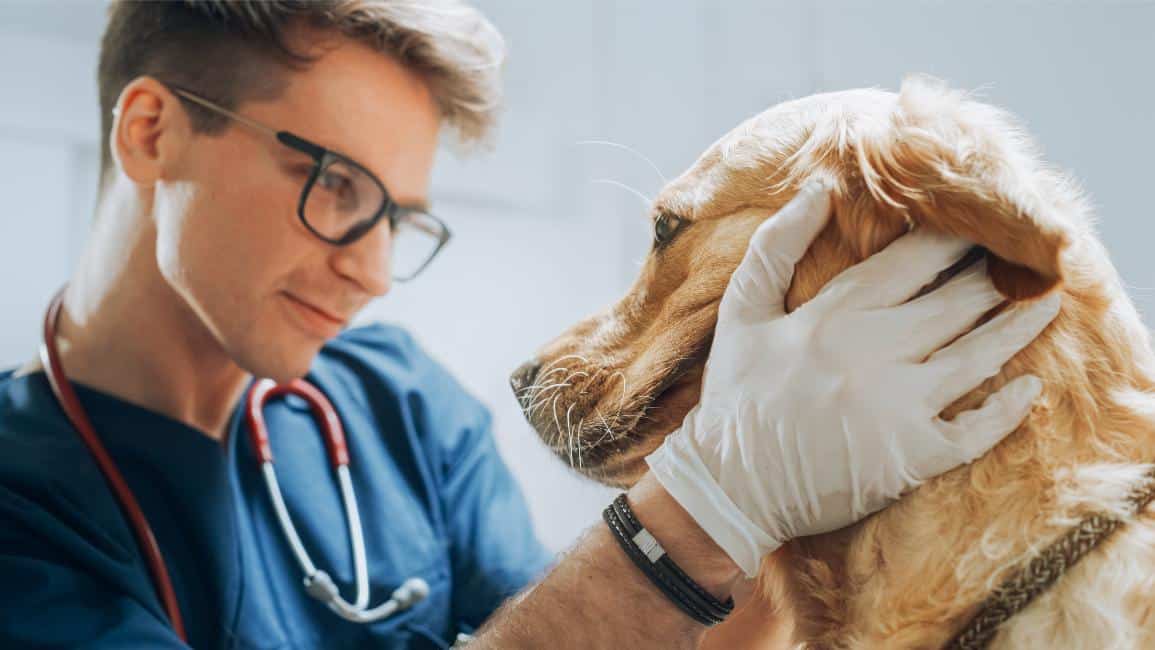
You might be sitting at your kitchen table right now, staring at a discharge sheet or lab report, wondering how things got so complicated so fast. One day your pet was “just a little off.” The next, your regular Louisville vet is talking about internal medicine, neurology, or oncology, and mentioning a referral to a specialist. It can feel like the ground shifted under your feet.end
On top of worry about your pet, you might be confused about how all these people work together. Who is really in charge of your pet’s care. Who you call when something changes. Whether your animal hospital and the specialist will share information so you are not repeating the same story over and over.
Here is the short version. Modern animal hospitals often partner closely with board certified specialists on complex cases. When this collaboration is done well, your pet benefits from deeper expertise, your primary vet stays involved as your “care quarterback,” and you get clearer answers and better options. When it is done poorly, you feel lost, bounced between clinics, and unsure what to do next.
Understanding how these partnerships work gives you more control and less fear. It helps you ask sharper questions and push for the kind of teamwork your pet deserves.
Why do animal hospitals bring in specialists for some pets and not others
It can be jarring to hear “We should bring in a specialist” when you have always trusted your regular veterinarian. You might quietly wonder if something was missed earlier, or if your vet no longer knows what to do. That doubt adds to the stress you already carry.
In reality, the shift from routine care to collaborative veterinary care with specialists usually means your vet is doing exactly what you want. They are recognizing that your pet’s situation is moving beyond what can be safely managed with general practice tools alone. Just as human doctors consult cardiologists or oncologists, veterinarians call on colleagues who have trained for years in narrow areas such as internal medicine, surgery, neurology, cardiology, or critical care.
So what types of cases tend to trigger this kind of partnership. Think about situations like these.
A dog whose “simple” vomiting and diarrhea does not respond to standard treatment, and whose ultrasound starts to look suspicious for inflammatory bowel disease or cancer.
A cat with ongoing weight loss, high thyroid levels, and now a heart murmur, where cardiac risk must be weighed before any anesthesia or advanced treatment.
A young large breed dog with sudden paralysis in the back legs, where an MRI and possible spinal surgery could mean the difference between walking again or not.
In each scenario, your primary veterinarian can see that the road ahead includes decisions that require specialized tools and training. That realization is not a failure. It is a safety check.
What makes complex cases feel so overwhelming for pet owners
Once a specialist is mentioned, the emotional and practical challenges usually spike. You may face several kinds of stress at once.
There is emotional strain. Fear of losing your pet. Guilt that you did not notice symptoms sooner. Worry about putting your animal through tests or surgery that might be painful or risky.
There is financial pressure. Advanced imaging, specialty consults, and 24 hour care are expensive. You may feel ashamed to ask about cost or to admit that you cannot afford some options.
There is confusion about roles. Do you still “belong” to your home animal hospital. Does the specialist now make all decisions. How do they communicate with each other. What if they do not agree.
There is decision fatigue. Every conversation seems to end with, “Here are three options.” Each option carries tradeoffs in risk, price, and quality of life. You are tired, scared, and trying to choose the “right” path with incomplete information.
Because of this tension, you might wonder whether involving a specialist only makes everything more complicated. It is a fair question, and it is one that veterinarians themselves have studied carefully.
For example, research published in the Journal of the American Animal Hospital Association has looked at how structured communication and clear roles between general practitioners and specialists improve continuity of care and owner understanding. You can read one such discussion of coordinated care models in an AAHA journal article on collaboration and referral standards.
Other research on complex decision making in veterinary medicine has shown that when owners feel included and informed, they are more satisfied even with hard outcomes, and pets are more likely to receive consistent follow up. A recent paper available through the National Institutes of Health explores how shared decision making and clear communication influence veterinary outcomes. That paper, which you can explore at this NIH hosted article on veterinary communication and trust, reinforces how important your role is in this partnership.
How do animal hospitals and specialists actually work together
To understand whether this kind of partnership can help your pet, it helps to know what usually happens behind the scenes.
First, your primary veterinarian identifies the need. They see a pattern of symptoms or test results that suggests deeper disease. They explain why specialist input could change diagnosis or treatment, and they ask your permission to refer you.
Next, there is an organized handoff. Your animal hospital shares records, lab results, imaging, and a summary of your pet’s history with the specialist. In strong partnerships, this information moves before your appointment so the specialist can review it and use your visit time wisely.
Then comes the specialist consultation. The specialist examines your pet, may order advanced tests, and then talks with you. Ideally, they explain both the medical picture and how it fits with your life, including cost, time, and your pet’s temperament and age.
After that, treatment planning becomes a shared effort. The specialist may perform surgery or manage advanced treatments at their facility. Your primary vet may handle ongoing medications, bandage changes, or rechecks closer to home. Both should stay in the loop about test results and changes.
Finally, there is long term follow up. Many complex cases become chronic conditions rather than one time crises. Your primary veterinarian often resumes the central role, while the specialist remains available for periodic rechecks or questions if something changes.
This kind of teamwork is sometimes called a referral network or specialist supported animal hospital care. When it runs smoothly, you feel like there is one unified medical team around your pet, even if that team works in different buildings.
What are the real tradeoffs of specialist partnerships for complex cases
You still might be weighing whether to proceed with a referral. It can help to see the main tradeoffs side by side, based on what many owners experience.
| Aspect | General Practice Only | General Practice + Specialist Partnership |
| Diagnostic depth | Bloodwork, X rays, basic ultrasound. Some conditions may remain uncertain. | Access to advanced imaging, endoscopy, specialty lab tests. Higher chance of a precise diagnosis. |
| Cost pattern | Lower short term costs. Risk of repeated visits and “trial and error” treatment. | Higher upfront costs for consults and tests. Often fewer repeated failures, more targeted care. |
| Convenience | Care at one familiar clinic. Less travel. | Multiple locations and appointments. More scheduling effort for you. |
| Continuity with your vet | Single doctor who knows your pet well, but may reach limits with complex disease. | Your vet stays involved, while specialist adds deeper expertise where needed. |
| Treatment options | Standard medications and procedures. Some advanced therapies not available. | Access to advanced surgeries, chemo protocols, or critical care that general practice cannot provide. |
| Emotional load | Fewer people involved, but more uncertainty about “what else” might be possible. | More people to coordinate with, but clearer understanding of prognosis and choices. |
There is no single “right” answer for every family. The best choice is the one that respects your pet’s comfort, your values, and your resources, while making smart use of the tools that modern veterinary medicine offers.
What can you do right now to guide your pet’s care
You do not have to just ride along and hope for the best. There are concrete steps you can take to make a specialty partnership work better for you and your pet.
1. Ask for a clear roadmap and written summary
Before you leave any appointment, with either your primary vet or the specialist, ask them to write down the key points. Diagnosis or suspected diagnosis. Main goals of treatment. Next steps and timelines. Who to call for what. A simple one page summary reduces confusion and gives you something to share if you need urgent care elsewhere.
If something is not clear, say, “I am feeling overwhelmed. Could you explain that in simpler terms.” Most veterinary teams welcome that honesty. It helps them adjust how they communicate.
2. Clarify roles and communication paths
Ask directly, “Who is my main point of contact for day to day questions.” and “How do you and the specialist communicate with each other.” You are entitled to know whether lab results and updates will be shared automatically or whether you will need to carry records between clinics.
If you sense a gap, such as one clinic not receiving reports from the other, speak up early. A simple request like, “Could you please send today’s notes to Dr. Smith at our animal hospital and copy me.” can prevent missteps later.
3. Be honest about limits and preferences
Specialists and general practitioners can only design a realistic plan if they understand your real life constraints. If you are worried about money, time off work, or your ability to medicate your pet several times a day, say so upfront. This is not selfish. It is responsible.
You can use phrases like, “I want to do the best I can within a budget of…” or “Daily hospital trips are not possible for me. Are there options that fit better with that.” When your team knows your boundaries, they can often offer alternate treatments, different timelines, or palliative care options that focus on comfort rather than cure.
Finding confidence in shared care for your pet
When your pet’s health becomes complex, it is normal to feel like you are walking through fog. You might be afraid of missing a chance to help, or of choosing something that causes unnecessary pain. You might also be grieving the loss of the simple, healthy days you had together.
Partnerships between animal hospitals and veterinary specialists cannot erase that pain, yet they can give structure to the chaos. They bring extra brains, extra tools, and extra experience around your pet, while keeping your primary vet by your side as a familiar guide.
You are allowed to ask questions. You are allowed to slow the conversation and request plain language. You are allowed to say no to options that do not fit your pet or your life. Strong veterinary teams welcome that kind of engaged, thoughtful owner, because it makes care better for everyone involved.
Even without a formal call to action, your next move can be simple. Reach out to your animal hospital. Share your worries. Ask how they work with specialists for complex cases. That single conversation can be the first step toward clearer answers and steadier ground for you and the animal you love.
