
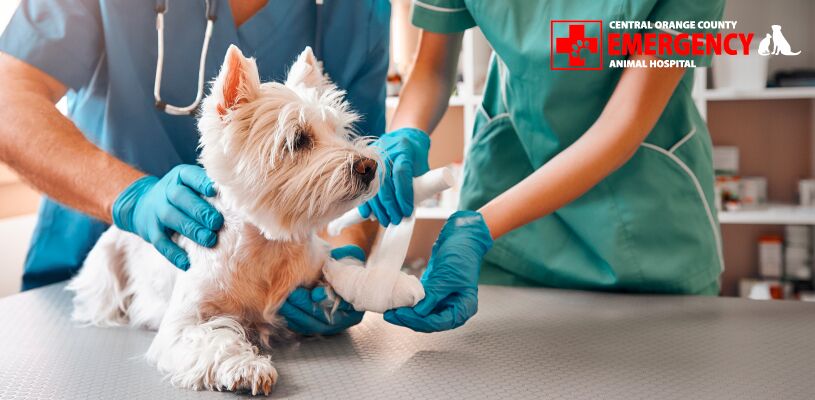
You might be standing in the exam room with your pet on the table, trying to smile while the vet talks, yet in the back of your mind, you are wondering something very different. Is a small neighborhood clinic really enough for what my pet needs, or should I be looking at a full animal hospital or a veterinary in Cloverdale, Surrey BC instead.end
That quiet worry usually shows up after a scare. Maybe your dog had a seizure for the first time. Maybe your cat is not bouncing back from surgery the way you hoped. Or you just got a serious diagnosis, and suddenly the question is not “When is the next vaccine” but “Where do I go if something goes very wrong at 2 a.m.”
If that sounds familiar, you are not alone. Many pet owners feel torn between the comfort and simplicity of their local clinic and the deeper resources of a larger animal hospital. The short version is this. Clinics are wonderful for routine care, yet hospitals offer advanced services that can change the outcome when things get complicated. Understanding those differences can help you choose with more confidence, instead of guessing in the dark.
Why does choosing between a clinic and an animal hospital feel so stressful
The stress comes from not knowing what your pet might need tomorrow. Routine care is predictable. Serious illness is not. That gap creates a constant “what if” in the back of your mind.
Imagine this. Your older Labrador has some stiffness, so your regular vet takes X-rays and says it is arthritis. You go home with medication and a plan. A few weeks later, your dog starts limping badly and cries when getting up. Your clinic can see you, but advanced imaging, pain management, or even surgery might be needed. Now you are scrambling to figure out where to go and how fast you can be seen.
Or picture a different scene. Your cat suddenly cannot urinate. Your local vet can diagnose the blockage, but they close in an hour and do not have overnight monitoring. You now face a painful choice. Move your cat to an emergency animal hospital, or hope things stay stable until morning. That pressure is exactly what you are trying to avoid by planning ahead.
So, where does that leave you? It helps to understand the specific services that set a full-service veterinary hospital apart from a small clinic. When you know what those services are, you can decide when it is fine to stay local and when you want the extra safety net of a hospital setting.
What services truly set animal hospitals apart from small clinics
Many animal hospitals share four core capabilities that most small clinics either do not offer or can only provide on a limited scale. These are not small upgrades. They are the kinds of services that matter when your pet’s condition is complex, urgent, or unclear.
1. Advanced diagnostics and specialty testing
Small clinics usually have basic bloodwork and simple X-rays. That works well for routine cases. An advanced animal care center often goes much further.
Hospitals connected to teaching institutions, such as the Cornell University Hospital for Animals, typically offer CT scans, MRI, ultrasound by board-certified specialists, and on-site laboratories that can run more detailed tests. This matters when symptoms do not match a simple diagnosis, or when you need fast answers in a crisis.
For example, a dog with recurring vomiting might get standard bloodwork at a clinic that looks mostly normal. At an animal hospital, an abdominal ultrasound or endoscopy can reveal foreign objects, subtle tumors, or inflammatory disease that would otherwise be missed or found much later.
2. Multi-specialty care under one roof
In a small clinic, one veterinarian usually handles almost everything. That can be comforting because you know the doctor well, yet complicated cases may need different eyes and training.
Many animal hospitals function more like human medical centers. They bring together specialists in surgery, internal medicine, cardiology, neurology, oncology, and more. For instance, the University of Georgia Veterinary Teaching Hospital lists multiple specialty services that work together on complex patients.
Think of a dog with heart disease that also has kidney problems and arthritis. In a hospital, a cardiologist, internist, and rehabilitation specialist can coordinate care. That teamwork can reduce medication conflicts, catch side effects earlier, and create a treatment plan that respects the whole animal, not just one organ system.
3. 24 7 emergency and intensive care
Many small clinics have limited hours. Some offer “on-call” support, but they may not have staff in the building overnight. An emergency-focused pet hospital or teaching hospital usually has people watching patients around the clock, with equipment ready for sudden changes.
Hospitals like the Washington State University Veterinary Teaching Hospital provide emergency and critical care, including oxygen cages, continuous monitoring, and advanced pain control. That level of support is not about being fancy. It is about safety when your pet is unstable.
Consider a dog with severe pancreatitis. At a small clinic, they might get IV fluids during the day, then go home overnight because the staff is gone. At an animal hospital, that same dog can stay in intensive care, with nurses checking vitals, adjusting fluids, and alerting a doctor if things worsen. The difference in risk is real.
4. Advanced surgery and rehabilitation services
Routine spays, neuters, and simple mass removals are well handled by many local clinics. Complex orthopedic procedures, spinal surgery, or cancer surgery often need more advanced tools and training.
Animal hospitals like the Colorado State University Veterinary Teaching Hospital offer advanced surgical suites, experienced surgeons, and post-operative rehabilitation such as underwater treadmill therapy and structured exercise plans. This is especially important for large breed dogs with knee injuries or pets recovering from major trauma.
So, when your vet mentions something like a cruciate ligament tear, a spinal disc problem, or a complicated fracture, that is a cue to ask whether referral to an animal hospital might improve both the surgical outcome and the long-term function of your pet.
How do clinics and animal hospitals compare in real-life decisions
When you are trying to decide where to go, it helps to see the differences in plain terms. The goal is not to say one is “better” than the other. It is to match what your pet needs with the right level of care.
| Situation | Small Clinic | Full Animal Hospital |
| Annual checkup and vaccines | Usually ideal. Familiar team and convenient scheduling. | Available, but often not necessary unless your pet already sees specialists. |
| Chronic but stable conditions (mild arthritis, controlled allergies) | Often appropriate with periodic checkups and basic testing. | Helpful if symptoms do not improve or multiple conditions overlap. |
| Sudden collapse, seizures, or severe breathing trouble | Good for immediate triage if open. Limited monitoring if unstable. | Best choice. 24/7 emergency care and intensive monitoring options. |
| Complex surgery (orthopedic, spinal, advanced cancer surgery) | Some clinics can do certain cases, but resources may be limited. | Designed for these procedures, with specialized teams and equipment. |
| Unclear diagnosis after basic tests | May need to refer out if advanced imaging or testing is required. | On-site advanced imaging, endoscopy, and access to multiple specialists. |
Once you see these categories side by side, the decision becomes less about loyalty to one place and more about asking “What does my pet’s situation really call for?”
What can you do right now to protect your pet’s future care
You do not need to wait for a crisis to sort this out. A few simple steps now can save you panic and delay later.
1. Ask your current vet about their limits and referral partners
At your next visit, have an honest conversation. Ask questions like. “If my dog needed overnight care, where would you send us?” “Do you work closely with any animal hospitals for advanced imaging or surgery?” Their answers will tell you how your clinic fits into a bigger care network.
2. Identify the nearest full service animal hospital
Spend a few minutes finding the closest emergency or teaching hospital that accepts public patients. Check their website for services, hours, and whether they offer both emergency and referral care. Save the address and phone number in your phone and write it on your fridge. That small step can shave precious minutes off your response time in an emergency.
3. Match your pet’s specific risks to the right level of care
Think about your pet’s age, breed, and current diagnoses. Large breed dogs are more prone to orthopedic issues. Some breeds have higher risks of heart disease or breathing problems. If your pet already has a complex condition, consider scheduling a consultation at a hospital, even if things seem stable. That visit can give you a clear plan and a team that already knows your pet if things change suddenly.
Moving forward with more clarity and less fear
Caring for an animal always involves some uncertainty. You cannot predict every illness or accident, and that unknown can feel heavy. Yet you can control how prepared you are and who you will turn to when things get serious.
By understanding the four key services that separate an advanced veterinary hospital from a small clinic, you are already reducing that “what if” anxiety. Your local clinic can continue to handle the everyday care your pet knows so well. A larger hospital can stand in the background, ready for the moments when routine care is no longer enough.
You do not need to choose one forever and abandon the other. You only need to choose what fits your pet’s needs today, and know where you will go if tomorrow looks different.
