
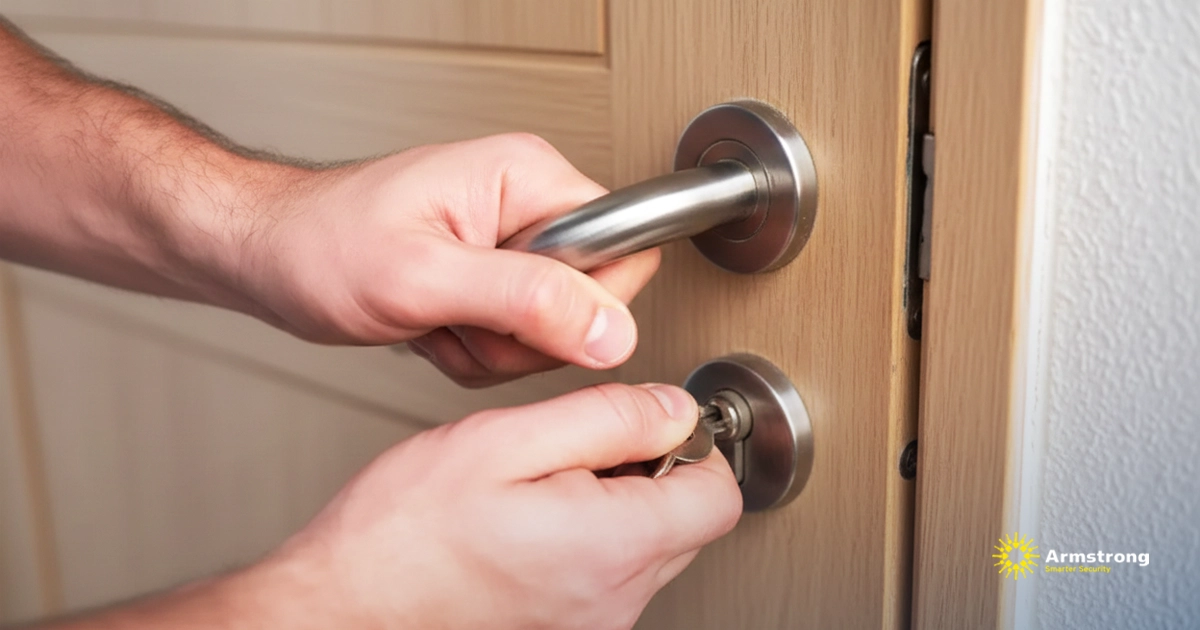
Lock problems always tend to happen at the most inconvenient moment: late at night, in the pouring rain, or when you are running late for an important meeting.
In truth, by the time the lock jams or the key snaps, the failure has been building for months or even years. Understanding the most common triggers for these failures is the first step in avoiding the frustration of being locked out of your own property.
Here are the 7 most common scenarios in which your door lock will fail without warning, along with what you can do about each one.
- Temperature Fluctuations And Door Alignment
In the UK, buildings are exposed to significant changes in temperature and humidity throughout the year. This is particularly relevant for those living in older properties with timber doors, but even modern composite doors can be affected.
When the weather shifts from a cold, dry winter to a warm, damp summer, the materials in your door and door frame expand and contract. Over time, this natural movement can cause the door to shift slightly out of its original alignment.
When the door drops or warps just a few millimetres, the locking mechanism no longer aligns perfectly with the strike plate—the metal pocket in the frame that receives the bolt.
You might notice that you have to lift, push, or pull the door slightly to get the key to turn. Many people treat this as a minor annoyance, assuming the door is just “a bit tight.” However, this creates immense internal stress on the lock cylinder and the bolt mechanism.
Eventually, the metal components reach their breaking point, and the lock will fail to engage entirely. If you find yourself having to use force to operate the handle or key, your lock is already signalling misalignment.
- Key Wear And Tear
We often blame the lock for a failure, but frequently, the culprit is the key itself. Keys are made from softer metals than the internal pins of the lock, which is by design—it is much cheaper to replace a worn-out key than the entire locking mechanism.
However, keys endure a lot of friction over their lifetime. As you insert and turn the key thousands of times, the jagged “teeth” or bitting of the key slowly wear down and become rounded.
A worn key fails to properly lift the lock’s internal pins to the “shear line,” the point where the cylinder can turn. This leads to a situation where the key enters the lock, but refuses to turn.
Often, this happens without warning because you have been compensating for wear by jiggling the key or applying more force until, one day, it simply won’t engage.
If your key shows visible signs of wear, or if you have had multiple copies made from a copy of a copy, it is time to have a professional cut a new one using the original key or the key code.
- Accumulated Debris In The Keyway
Over time, the keyway collects everything from lint in your pocket to road dust and grit. If you live in an urban environment or near a busy road, this buildup can be surprisingly fast.
When this dust mixes with the natural lubricants inside the lock, it creates a sticky, abrasive paste. This sludge traps the tiny pins and springs inside the mechanism, making them sluggish. You might notice the key feels “mushy” when inserted, or that it takes a little extra effort to turn.
Many homeowners make the mistake of spraying generic lubricant or oil into the lock in an attempt to fix this.
This is often counterproductive, as the oil attracts even more dust, accelerating the gunk buildup. If the internal pins become jammed with debris, the lock can seize instantly, leaving you with a key that refuses to turn or gets stuck inside.
- Broken Internal Springs
Inside your standard cylinder lock, there is a series of tiny springs and pins that must align perfectly for the lock to open. These springs are subject to metal fatigue. Like a paperclip bent back and forth too many times, these springs eventually lose their tension.
When a spring snaps, the pin it was supporting can drop into the wrong position, effectively blocking the mechanism permanently.
This type of failure is particularly dangerous because it offers almost no warning. You could unlock the door to leave for work in the morning, and when you return in the evening, the internal spring has finally failed, and the lock is jammed.
Because these components are internal and invisible, there is very little a homeowner can do to prevent this, other than keep the lock free of debris, which reduces stress on the internal parts.
- Misaligned Strike Plates
We have touched on door alignment, but the strike plate itself is a frequent point of failure. The strike plate is the metal piece attached to the door frame.
Over the years, the constant impact of the latch hitting the plate—every time you close the door—can cause the screws to loosen or the wood behind the plate to splinter and soften.
If the strike plate shifts, the latch bolt might not extend fully into the hole. When this happens, the door is not truly “locked” in a secure sense, even if the handle feels locked.
Conversely, if the plate shifts inward, the bolt may rub against the edge of the plate, putting undue pressure on the internal mechanism of the lock whenever you turn the key.
If you notice your door rattling in the frame or the latch bolt not “click” home securely, the strike plate is likely the issue.
If you leave it unaddressed, this vibration and misalignment will eventually cause the lock mechanism to snap under the pressure.
- Forceful Handling Or Slamming
It is a habit many of us are guilty of: pulling the door shut firmly, or even slamming it in frustration.
While modern doors are built to be robust, they are not designed to withstand constant impact. Every time a door is slammed, the latch bolt and the deadbolt are subjected to a violent shock.
This repeated trauma can cause the lock’s internal mechanisms to become misaligned. It can damage the delicate cam that connects the key cylinder to the rest of the lock.
Over time, this impact damage accumulates. The lock might work fine today, but the internal components have been slowly bending or cracking under the stress.
Eventually, one too many slams causes a critical failure. The lock might suddenly stop retracting the latch entirely, or the key might rotate 360 degrees without ever engaging the bolt.
Developing a habit of closing the door gently and ensuring the latch is fully retracted before closing the door can significantly extend the life of your hardware. Pair that with a good security camera, and your home’s defences will be much more formidable.
- Age And Component Wear
Sometimes, the reason for failure is simply the end of the product’s lifespan. All mechanical locks are built with a certain number of “cycles”—the number of times they can be opened and closed—before they wear out.
High-quality locks last for decades, while cheaper, mass-produced hardware may struggle after only a few years of heavy use.
If you have lived in your home for a long time and have never replaced the locks, you might be surprised to learn that the internal components are likely very tired. Metal fatigue is real.
The constant friction of the key, the seasonal shifts of the door, and the daily operation take their toll. If your locks are old, they may lack the security features found in modern hardware, and they are statistically much more likely to fail unexpectedly.
If you cannot remember the last time your locks were updated or replaced, it is worth having a professional security audit of your home’s entry points.
Calling Bromley lock repair and replacement services can help ensure your hardware remains reliable and up to modern security standards.
Conclusion
When locks fail, it is always frustrating, but, as you can see, with a bit of regular maintenance, this is largely avoidable.
Just be vigilant and pay attention to the small cues. That way, you can identify problems while they are still manageable.
Remember, most lock failures are not sudden accidents, and a well-maintained mechanism will not let you down when you least expect it.
Good luck and stay safe!
